
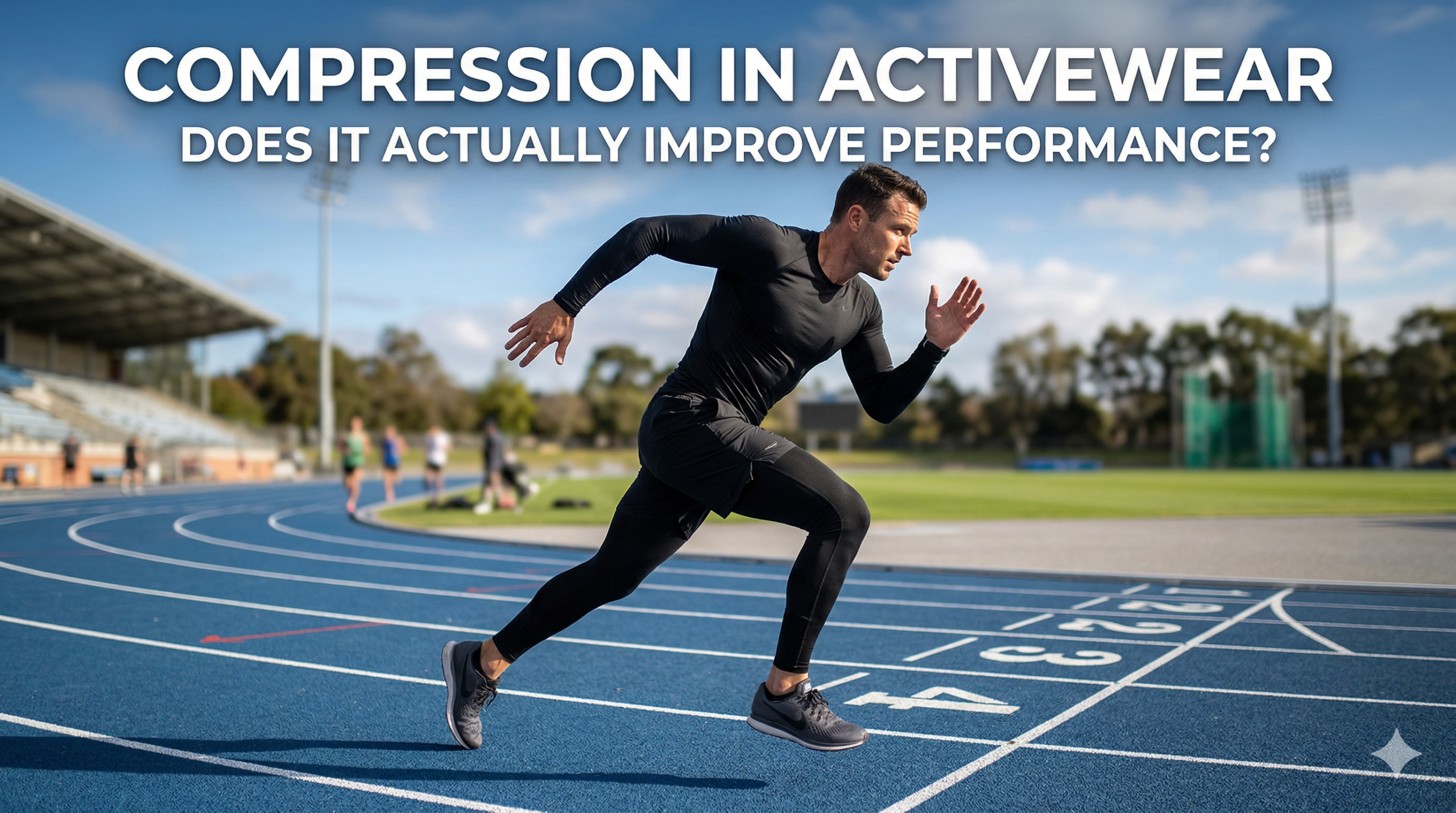
Compression is a commonly used term for selling activewear. But its purpose is not always well understood. Before you invest in it, you must know how it works.
Where does it provide quantifiable returns? Read on to learn more!
The real meaning of compression
When the term is used in reference to activewear, it means a fabric that is designed to provide controlled pressure to certain parts of the body. It is meant to:
- Stabilize muscles
- Improve circulation
- Enhance the efficiency of the entire movement process
Compression garments are made using elastic fibers such as elastane. They are combined with synthetic materials such as:
- Nylon
- Polyester
The outcome is a snug, body-hugging fit. It provides graduated pressure:
- Tight at the edges
- A bit more relaxed in the middle of the body
This produces three main effects:
- Muscle stabilization: lessens unwarranted vibration during impact
- Circulatory support: optimizes the flow of blood
- Proprioception: enhances body positioning
The goal is to offer controlled support.
Is compression a good performance improver?
Slightly. This depends on circumstances.
Compression has been found to:
- Minimize muscle vibration in high-impact activities
- Delay fatigue in endurance situations
- Enhance intersession recovery
Nevertheless, it has minimal effect on:
- Speed
- Strength
- Output
Wearing compression gear will not make you suddenly run faster. Or lift heavier. Consistency is where it’s at. The gear can assist you in sustaining longer periods of performance by:
- Minimizing muscle fatigue
- Enhancing comfort
Where compression wields the most significant impact
Compression is best applied under certain circumstances:
Endurance training
Long-distance running or cycling benefits from:
- Less muscle vibration
- Better circulation
In the long run, wearing compression leggings for running may reduce fatigue.
High-impact workouts
These are exercises such as HIIT or sprinting. They impose recurring muscle stress. Compression active wear helps in stabilizing those loaded muscles.
Recovery
This means wearing compression garments after exercise. They can assist in blood circulation. This potentially:
- Alleviates pain
- Shortens recovery periods
Selecting the appropriate compression level
Not all compression is the same. It can be generally divided into three:
- Light compression: Ideal for everyday workouts. This is known as comfort-oriented compression
- Moderate compression: Offers balanced support for mixed training
- High compression: Provides maximum assistance during intense or sustained sessions
Higher compression is not always better. It can limit your range of movement. It is also uncomfortable. Hence, counterproductive.
Fit is more important than compression
Even high-quality compression fabrics will not work with the wrong fit.
Look for:
- Equal pressure all over the garment (no digging or loose spots)
- A secure waistband or structure that remains in place
- Fabric that stretches without losing tension
Poor fit cancels out the benefits of compression entirely.
A practical takeaway
Activewear compression is a support mechanism. It will:
- Minimize fatigue
- Enhance comfort
- Aid recovery
However, it will not take the place of training, technique, or conditioning.
Compression gear can be helpful with regular training. Particularly in an endurance or high-impact environment. Simply consider it as part of your total system. Not the determining element in your performance.